
 An independent think tank at the Riigikogu
 Status and Prospects of the Estonian Economy 2024. Report to the Riigikogu
As a result of the work of the Competitiveness Expert Council convened by the Riigikogu Economic Affairs Committee last year, this report was prepared to present the future prospects, opportunities and obstacles of the Estonian economy and promising economic policy recommendations.
The competitiveness of a country can be analysed in several ways. Most often, economic indicators of countries are compared. For example, the share of different types of investments in the gross domestic product (GDP), the volume of direct investments, the country’s level of technological advancement and its position in supply chains may be considered. This is important information for assessing the country’s growth potential and identifying bottlenecks.
However, in policy making, it is equally important to understand why the structure and economic indicators have developed the way they have. Therefore, it is necessary to look beyond economic indicators and assess the bigger picture. From a competitiveness perspective, several other factors are important as well, such as a stable economic environment, strong institutions, a well-developed financial system, dynamic businesses, good infrastructure, a flexible labour market and a workforce with the necessary skills, high innovation capacity, widespread use of information and communication technology (ICT), good public health and other indicators.
In addition, a country’s competitiveness is influenced by societal values and norms, such as risk aversion, solidarity, ethics, etc. These are factors that are beyond the scope of immediate policy measures, but which can still be shaped over a longer period of time through institutional reforms.
Thus, many factors should be taken into account when studying competitiveness. Besides delving into assessments of Estonia’s competitiveness, the expert council studied a limited number of bottlenecks in more depth:
- It is difficult for companies to find qualified workforce in Estonia.
- The gap between skills and actual work is quite large in Estonia compared to other countries. Labour turnover is also higher in Estonia compared to the European average.
- The level of digitalisation and automation is low in Estonian companies. Not many are using artificial intelligence.
- The economy’s resource productivity is low and companies lack knowledge on operating a technology-intensive business.
- There is too much bureaucracy and little clarity on government priorities and policies.
- The cost of capital is higher for Estonian companies than for those in most other EU countries.
- Implementing the green transition may result in more increase in costs.
- Estonia’s small open economy is vulnerable to external shocks.
The Competitiveness Expert Council is made up of Ülo Kaasik, Deputy Governor of Eesti Pank, Priit Vahter, Professor of Applied Economics at the University of Tartu, Kadri Männasoo, Professor of Applied Microeconometrics of Tallinn University of Technology, and Uku Varblane, Head of Research at the Foresight Centre. In addition, many experts and stakeholders such as other universities and research institutions, employer and employee representatives, and government institutions were involved in the project.
PrintPeople linked to the report
Research leader
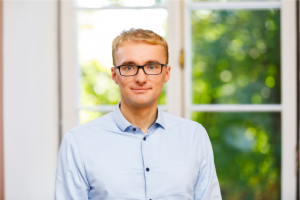 Uku Varblane
Head of Research at Foresight Centre
Uku Varblane
Head of Research at Foresight Centre