
Eurostat’s latest forecast shows that over the next fifty years, life expectancy in Estonia will rise to 85 years and expected working life may extend to 45 years. According to the Foresight Centre’s new short report, “Extending Working Life and Lifelong Learning”, a longer working life means that people will need to update their skills, change career paths, or learn new ways of working.
News
The Foresight Centre’s new research stream will focus on examining the types of lifelong learning systems Estonia will need in the future, given its ageing population. The report, which will be completed in the spring, shows key trends and possible scenarios in a situation where the working-age population is shrinking, working years are increasing, and the continuous updating of skills by older people is becoming more and more important.
The report, commissioned by the Foresight Centre, finds that in the future, an increasingly smaller generation of young people will shoulder greater responsibility in both economy and society. At the same time, the mental health crisis is hindering young people’s independence, decision-making abilities and participation in society.
It is likely that in the event of a dispute, the employment status of platform couriers and platform taxi drivers would be classified as an employment relationship in Estonia, according to a legal analysis commissioned by the Foresight Centre. In Europe, most court disputes have resulted in platform workers being classified as employees, and the platforms have changed their work organisation after that.
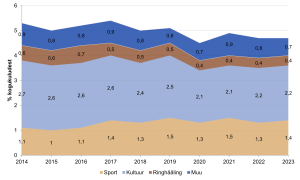
Over the last decade, the share of culture and sports in total government spending has decreased and more private funding is needed to ensure the vitality of these fields. According to the Foresight Centre’s new short report “State Funding Patterns for Culture and Sports”, this is easier to do for sports than for culture.
According to the new short report by the Foresight Centre, restricting access to social media does not provide children and young people with sufficient protection from the risks of the digital world. The best solutions for mitigating risks include combining platform regulations with the development of young people’s digital competence.
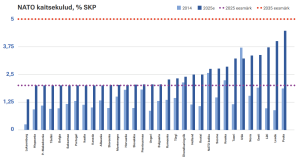
The increasing NATO defence spending means there is an opportunity for Estonia to strongly develop its local defence industry. Its volume could grow to up to 6% of GDP in the next ten years. However, the growth of the local defence industry depends on Estonia’s ability to resolve its labour, regulatory and capital issues, according to the Foresight Centre’s new short report.
A survey commissioned by the Foresight Centre revealed that people trust the police and other state institutions much less when it comes to intimate partner violence than in other situations. At the same time, those who have been directly or recently exposed to violence trust women’s support centres and Victim Support (Ohvriabi) highly.
A study conducted by the University of Tartu on behalf of the Foresight Centre showed that expanding the decision-making rights of young people may be highly desirable for society, as the youth of today are for the most part prepared to make complex decisions from the age of 16. However, the environment in which decisions are made strongly influences the quality of young people’s decisions.
According to the Foresight Centre’s new study “Pension Size and Purchasing Power by 2050”, a multi-pillar pension system makes pensions more resilient to demographic shocks, spreading risks between the labour market and capital markets.