
 An independent think tank at the Riigikogu
 Status and Prospects of the Estonian Economy 2025. Report to the Riigikogu
The report, prepared as a result of the work of the Competitiveness Expert Council convened by the Riigikogu Economic Affairs Committee, presents the future prospects, opportunities and obstacles of the Estonian economy and promising economic policy recommendations.
The first chapters of the report provide an overview of recent changes and trends in the global economy and the competitiveness of the Estonian economy compared to other countries, including its neighbours. It highlights how changes in trade policy and trade relations have become one of the main risk factors for the global economy and what this means for Estonian companies. The second half of the report offers food for thought for further discussions through longer, specialised topics. This report provides an in-depth analysis of the energy system’s functioning and the transition to renewable energy, electronic communications as an important competitiveness factor, equity financing of companies as well as value chains and productivity in agriculture.
The expert council took a science-based approach to studying the country’s competitiveness, using the results of both Estonian and international research. The expert council made the following recommendations regarding the topics that were covered in more depth in the report.
Recommendations related to the electricity market:
- Plan the share of variable renewable electricity in Estonia to be between 60–80% of total consumption, considering the costs and associated benefits for consumers, producers and the energy system.
- Consider differentiating electricity excise duties and fees aiming to reduce the final price of electricity for those segments of business consumers whose unit cost of electricity exceeds that of competing companies in neighbouring countries.
- Consider conducting a thorough meteorological study to map long-term deviations in wind speed in different regions of Estonia, or even better, in all the Baltic states.
- Turn attention to research and development and investments in efficient, controllable electricity generation capacities that have low CO₂ emissions and/or that allow for optimal use of existing infrastructure and resources.
Recommendations related to communication services:
- Make taking communications infrastructure into account a routine and legally required part of all construction projects, including road and building construction.
- Raise awareness among local governments and landowners on modern communications in order to avoid unjustified requirements when building communications networks and encourage the construction of in-house fibre optic networks, which provides more options and helps lower the price of fixed internet connections.
- Increase the fines applicable under the Electronic Communications Act in the event of unfair market conduct and strengthen the market supervision capacity for fixed internet connections in order to enhance competition in the fixed communications market.
Recommendations related to agriculture:
- To ensure food security, support self-sufficiency (in key commodity groups), making sure that there are domestic alternatives to inputs, and ensuring that Estonia has possibilities to process agricultural raw materials to make final products.
- Support industrial symbioses and the circular economy to promote the valorisation of agricultural and food production by-products into biogas or in other ways.
- Reduce the fragmentation of grants and support measures.
Recommendations related to financing of companies:
- We recommend that the state, as an important anchor investor, promote cross-border fund-of-funds initiatives, involving the Nordic countries in addition to the Baltic states.
This report is a follow-up to the first report prepared in 2024.
The Competitiveness Expert Council is made up of Ülo Kaasik, Deputy Governor of Eesti Pank, Urmas Varblane, Professor of International Business of the University of Tartu and Academician, Kadri Männasoo, Professor of Applied Microeconometrics of Tallinn University of Technology, and Uku Varblane, Head of Research at the Foresight Centre. In addition, many experts and stakeholders such as other universities and research institutions, employer and employee representatives, and government institutions were involved in the project.
PrintPeople linked to the report
Research leader
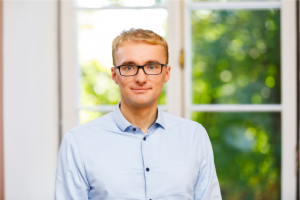 Uku Varblane
Head of Research at Foresight Centre
Uku Varblane
Head of Research at Foresight Centre