
Eurostat’s latest forecast shows that over the next fifty years, life expectancy in Estonia will rise to 85 years and expected working life may extend to 45 years. According to the Foresight Centre’s new short report, “Extending Working Life and Lifelong Learning”, a longer working life means that people will need to update their skills, change career paths, or learn new ways of working.

News
The Foresight Centre’s new research stream will focus on examining the types of lifelong learning systems Estonia will need in the future, given its ageing population. The report, which will be completed in the spring, shows key trends and possible scenarios in a situation where the working-age population is shrinking, working years are increasing, and the continuous updating of skills by older people is becoming more and more important.
The report, commissioned by the Foresight Centre, finds that in the future, an increasingly smaller generation of young people will shoulder greater responsibility in both economy and society. At the same time, the mental health crisis is hindering young people’s independence, decision-making abilities and participation in society.
A study conducted by the University of Tartu on behalf of the Foresight Centre showed that expanding the decision-making rights of young people may be highly desirable for society, as the youth of today are for the most part prepared to make complex decisions from the age of 16. However, the environment in which decisions are made strongly influences the quality of young people’s decisions.
Hiring private tutors is widespread in Estonia. According to the study by the Foresight Centre, “The Use of Private Tutors in Estonia”, the need for private tutoring is greatest in Russian-speaking families, where private tutors are hired more than twice as often as in Estonian-speaking families.
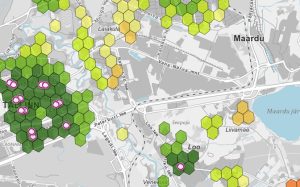
The Land and Spatial Development Board, the Ministry of Regional Affairs and Agriculture, the Foresight Centre and Statistics Estonia have created a map application of public services. Anyone can use this to find out how far the nearest kindergarten, school, family doctor and other public services are from their home.
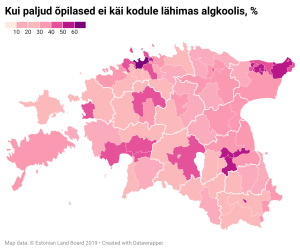
Nearly half of the students in Estonia do not attend the primary school closest to their home and almost 60% do not go to the upper secondary school of their residence. According to the short report ‘Estonian Internal Educational Migration in General Education’ by the Foresight Centre, large-scale domestic educational migration indicates that many families are looking for higher quality education and reject the schools closest to their home.
This year, the Foresight Centre researches the accessibility of local services. For this, the spatial data is analysed in order to assess the distance of the most essential services from people’s homes. The efficiency of municipalities is also analysed in order to get an overview of how effectively the available resources are used.
In Estonia, hobby education is more accessible to children of more educated and wealthier parents and mainly in Harju, Tartu and Pärnu counties. Ensuring the accessibility of hobby education for children with special educational needs and more difficult socioeconomic backgrounds is a major challenge according to the Foresight Centre’s short report ‘Accessibility of hobby education in Estonia’.
In Estonia, one in three grade 7-12 mathematics teachers is 60 or older. In the next decade, nearly 600 new mathematics teachers will be required to replace retiring teachers. Although two-thirds of those who have studied to become mathematics teachers stay in the profession, the number of new generation teachers is only about half of what is required. The need for new mathematics teachers is the greatest in Lääne County and Rapla County, according to the Foresight Centre’s short report ‘The need for the next generation of mathematics teachers and their alternative job opportunities’.