
 An independent think tank at the Riigikogu
 Report: The future contribution of older people to the labour market depends on their skills, not on an increase in employment
Due to an ageing and shrinking population, the role of older people in the labour market is growing. However, Estonia cannot expect a significant increase in their employment rate, as it is already among the highest in Europe, as highlighted by the Foresight Centre in its new short report.
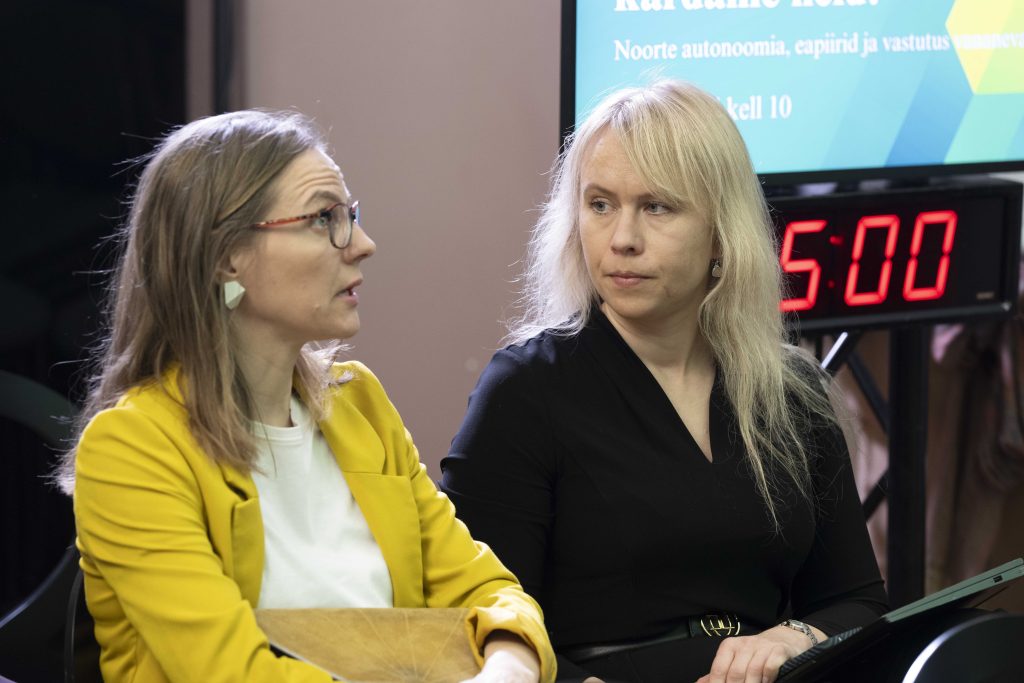
Eneli Kindsiko, an expert at the Foresight Centre, said that in the future, a country’s competitiveness will increasingly depend on how well it is able to integrate older people – or so-called ‘silver workers’ – into the labour market. “In Estonia, the employment rate among silver workers is already very high by international standards,” said Kindsiko. “We should not just look at how many older people are working, but above all at what sort of work they do and how well their skills are being utilised. The key factor is the extent to which we are able to keep the knowledge and skills of our silver workers up to date and apply them in critical sectors such as education, engineering and healthcare.”
Estonia is currently among the top countries in the European Union in terms of the labour market participation of older people. In the 65+ age group, Estonia’s employment rate is more than twice as high as the European Union average, and amongst those aged 70–74, the employment rate is more than three times as high.
According to Kindsiko, the key issue for Estonia is how to avoid a situation where, as they get older, experienced workers move into jobs that do not match their qualifications or offer lower added value. “In the face of demographic pressures, making better use of the skills of older workers is a vital resource for the economy,” she said.
Unfortunately, age discrimination also hinders the employment of older workers, and research suggests that older people face greater barriers to finding work than younger candidates.
For example, Swedish researchers have found that the likelihood of being invited to a job interview begins to decline significantly as early as one’s early 40s and falls to a very low level close to retirement age. Older workers with low qualifications who perform low-skilled tasks are hit particularly hard in the labour market.
Unlike in the Nordic countries, Estonian pensioners continue to work primarily for financial reasons, rather than because they enjoy their work or wish to remain active. The main reason for their high employment rate is the relatively low state pension, and over 60 per cent of Estonian pensioners cite financial need as the main reason for working, which is twice the average for OECD countries. A severe labour shortage in certain sectors, such as education and healthcare, also plays a part.
In Northern and Western Europe, however, people tend to continue working primarily because they enjoy their work and wish to remain active in later life. Furthermore, flexible working arrangements enable older people to find meaningful ways to apply their skills on the labour market.
The short report “Silver Workers in the Estonian Labour Market” (in Estonian) has been produced as part of the research stream “Trends and the Future of Lifelong Learning”. The research stream aims to identify the main uncertainties and key factors shaping the future of lifelong learning in Estonia up to 2050.
Latest news
-
18.08 2026Report: A fifth of ride-hailing and courier service providers are at a dead end of their careers
The Foresight Centre notes in its new short report, “Does Platform Work Support Careers?” that a fifth of people providing ride-hailing or courier services via platforms are at a dead end of their careers, working full-time in a field for which they consider themselves overqualified.