
 An independent think tank at the Riigikogu
 Report: Banning social media does not offer sufficient protection for young people
According to the new short report by the Foresight Centre, restricting access to social media does not provide children and young people with sufficient protection from the risks of the digital world. The best solutions for mitigating risks include combining platform regulations with the development of young people’s digital competence.
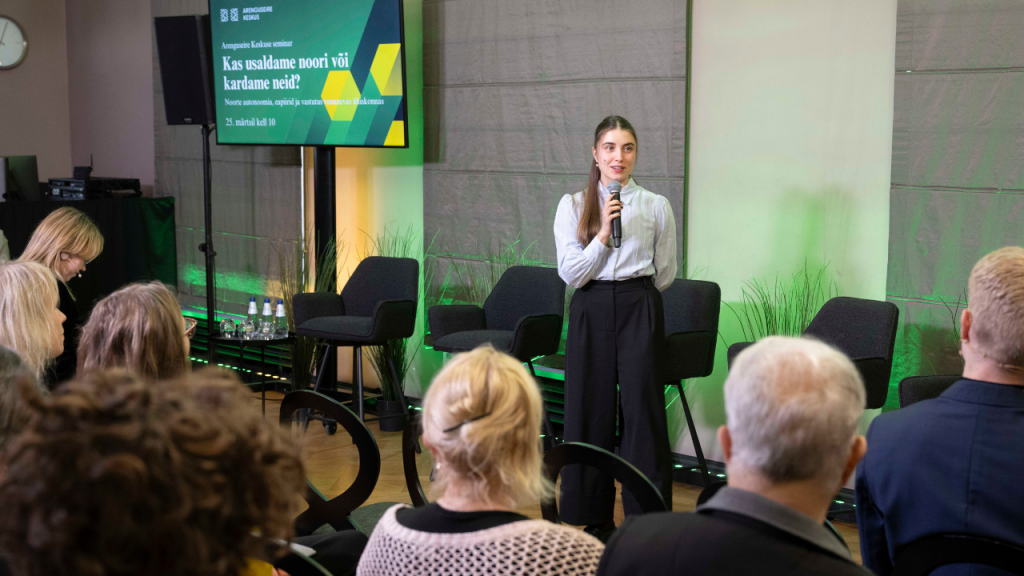
Eneli Kindsiko, an expert at the Foresight Centre, said that social media has a big impact on children and young people today, and more and more countries have started to discuss age-based restrictions. “Imposing age restrictions seems like an easy solution, but it’s more of a band-aid that’s not very effective,” said Kindsiko. “In reality, young people will always find ways to bypass restrictions. Researchers recommend focusing on regulating the design logic of platforms and educating and empowering children and young people.”
OECD data shows that half of 15-year-olds spend more than 30 hours a week on digital devices, some even more than 60 hours a week. They spend about 95% of this time using their devices for entertainment purposes. The Internet is an integral part of the daily lives of Estonian youth aged 9–16 as well. As many as 98% use the Internet every day. Inevitably, this comes with various risks for young people.
For example, studies show that almost 60% of young people aged 9–16 have seen disturbing content online over the past year. One in six young people comes across such content at least once a month. More than a third of students have seen content promoting extreme thinness or dangerous challenges.
17% of students have experienced online bullying. One in five young people has received sexually explicit messages. Young people talk about disturbing online experiences most often to their parents (34%) or friends (25%), but 18% of children do not share them with anyone.
A significant proportion of Estonian youth take part in spreading risks. For example, 28% of boys and 20% of girls may knowingly share misinformation.
Social media also influences young people’s consumption. They are exposed to covert advertising, influencer marketing and in-app purchases. It is estimated that 14-year-olds could be exposed to up to 1260 ads per day on social media alone.
Speaking about Estonia’s options, Kindsiko pointed out that although social media’s harmful effects are often highlighted, the digital world also creates value for young people by supporting self-expression, social cohesion, learning and participation.
“Estonia should focus on minimising harmful effects and maximising beneficial ones,” she said. “It is also important to recognise that empowering young people in the digital environment begins before they reach school age and gradually develops along with the child’s development. Estonia should focus on the topic of digital awareness as early as in kindergarten.”
The short report “Youth-related risks and protection in social media” (in Estonian) has been prepared as part of the research stream “The Future of Youth Autonomy”. The aim of the Foresight Centre’s research stream is to map which factors influence youth autonomy and decision-making power and how well the developments in youth autonomy correspond to the various age limits regulating young people’s rights.
Latest news
-
15.06 2026Report: The mental health crisis is hindering young people's independence and participation in society
The report, commissioned by the Foresight Centre, finds that in the future, an increasingly smaller generation of young people will shoulder greater responsibility in both economy and society. At the same time, the mental health crisis is hindering young people’s independence, decision-making abilities and participation in society.