
 An independent think tank at the Riigikogu
 Use of cars has doubled in 20 years
Over the last 20 years, the use of a private car to commute between home and work has nearly doubled in Estonia, says the Foresight Centre report “Future of Mobility. Development Scenarios up to 2035” which will be published on Tuesday. Transport takes up 14% of the total expenditure of residents.

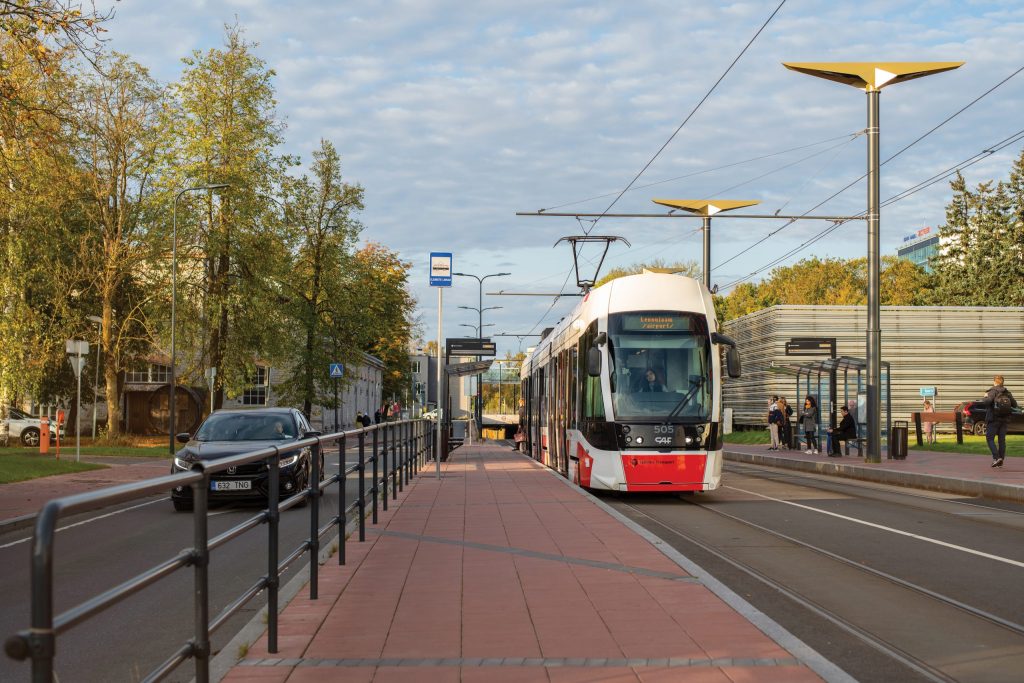
“The use of cars has increased mainly at the expense of public transport and walking,” said Foresight Centre expert Uku Varblane. “As a consequence, Estonia has become one of the most car-centred countries in the European Union in a short time.”
The opportunity to use a private car is often also the precondition for ensuring access to certain jobs. “At times, this makes a car a mandatory expense which can take up a noticeable part of smaller incomes,” Varblane said. “At the same time, the focus on private cars is inefficient and wasteful of space, and negatively affects our living environment and the health of the population.”
Simultaneously, the use of public transport for commuting has been consistently falling, reaching as low as 18.4% in 2020 (from 20.6% in 2019). This remains considerably below the 25% target set in the transport development plan 2014–2020, and also below the 2014 base level (22.6%).
The report shows that the average transport expenses of Estonian residents doubled in 2012–2019 (2012 – EUR 428, 2019 – 859), while the purchase and maintenance expenses of vehicles tripled (2012 – EUR 166, 2019 – 489). Yet the average expenses of one member in a household have grown only by 69% in total.
The final report of the Foresight Centre “Future of Mobility. Development Scenarios up to 2035” will be presented online on May 25 at 11 a.m. EEST.
The Foresight Centre is a think tank at the Chancellery of the Riigikogu that analyses long-term developments in society and the economy. The Centre conducts research projects to analyse the long-term developments in Estonian society, and to identify new trends and development directions.
Latest news
-
18.08 2026Report: A fifth of ride-hailing and courier service providers are at a dead end of their careers
The Foresight Centre notes in its new short report, “Does Platform Work Support Careers?” that a fifth of people providing ride-hailing or courier services via platforms are at a dead end of their careers, working full-time in a field for which they consider themselves overqualified.